Christmas Snowflake SVG: A Designer’s Stitch Review
As a professional embroidery digitizer and product reviewer, I approach every new machine embroidery design with a healthy dose of skepticism. The marketplace is flooded with generic holiday graphics, but finding a file that translates beautifully from screen to fabric requires a discerning eye. When I first opened the ZIP archive for this Christmas Snowflake SVG, I wasn't just looking for a pretty vector; I was evaluating its structural integrity for real-world production. This review breaks down how this specific multilayer cut file performs when adapted for needle and thread, specifically for makers and small business owners who need reliability over novelty.
First Impressions: Visual Balance and Digitizing Potential
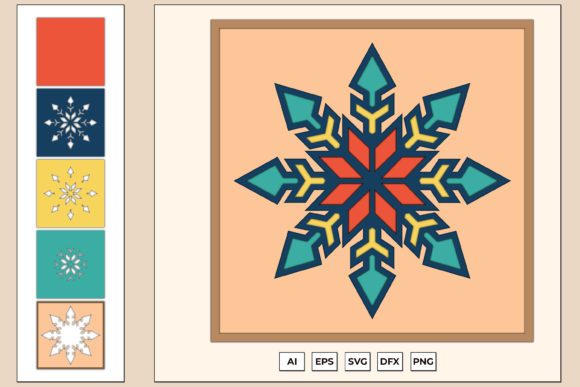
The initial mood of this Christmas Snowflake SVG is crisp and architectural. Unlike softer, hand-drawn winter motifs, this design possesses a geometric precision that suggests it will hold up exceptionally well during the digitizing process. For an embroidery project, symmetry is everything. If a snowflake is even slightly off-balance, the human eye detects it immediately once stitched out. This file exhibits clean nodes and logical pathing in its vector form, which typically translates to fewer jump stitches and cleaner trims when converted into an embroidery file.
The inclusion of "3D" elements in the description is particularly noteworthy for embroiderers. In our industry, 3D often implies layered foam or stacked appliqué techniques. Visually, the design has distinct separation between inner and outer elements, making it a prime candidate for a textured applique design. Rather than a flat fill, this layout invites the use of dimensional stitching to create depth, transforming a standard holiday motif into a premium tactile experience.
Real-World Application: The Custom Sweatshirt Test
To truly evaluate this asset, I mentally placed it in my most frequent client scenario: a high-end custom apparel order for a boutique. Imagine preparing a heavyweight French terry sweatshirt for a holiday capsule collection. This is where the Christmas Snowflake SVG needs to prove its worth.
On a garment like this, the design serves as a focal point. Because the snowflake features intricate branching, I would utilize a combination of satin stitch borders and lighter fill stitch interiors to prevent the fabric from becoming bulletproof. The multilayer nature of the original file allows me to assign different thread colors or textures to separate sections. For example, using a metallic silver thread for the outer lattice and a matte white for the center creates a sophisticated contrast that elevates the perceived value of the custom apparel.
For Etsy sellers and shop owners, this versatility is key. The same base design can be resized for a baby onesie (using softer threads and reduced density) or scaled up for a tote bag design. However, the true test lies in how the design interacts with the fabric's grain. On a sweatshirt, the nap can sometimes swallow fine details. This snowflake’s bold geometry ensures that even on textured fleece, the silhouette remains readable and sharp, maintaining brand consistency across different products.
Navigating Fabric Limitations and Hoop Constraints
While the design is versatile, experienced makers know that not all substrates are created equal. There are specific scenarios where you must exercise caution with this digital embroidery file.
- Stretchy Knits and Thin Fabrics: Intricate snowflakes often require significant stitch counts. On lightweight jersey or performance wear, this density can cause puckering. Always pair this design with a cut-away stabilizer and consider a water-soluble topping to keep the stitches from sinking into the knit.
- Curved Surfaces: If you are attempting cap embroidery or stitching near seams, the rigid symmetry of the snowflake can highlight alignment issues. The curvature of a hat distorts flat designs; ensure your machine embroidery design software allows for distortion compensation before committing to a curved surface.
- Small Hoop Sizes: Reducing a complex multilayer snowflake below 3 inches can result in muddy details. If your hoop size restricts scaling, verify that the smallest internal gaps remain open after resizing. Sometimes, simplifying the design by removing the innermost layer is necessary for miniature applications like baby embroidery or sleeve cuffs.
- Dark vs. Light Fabrics: White snowflakes on dark fabric are classic, but they require a solid underlay to prevent the dark fabric color from bleeding through the white threads. Conversely, on white fabric, consider using a tonal grey or silver outline to define the edges, as pure white-on-white can disappear in photographs and low-light retail environments.
Commercial Viability and Product Value
For creative entrepreneurs, time is money. A poorly optimized file leads to thread breaks, re-hooping, and wasted blanks. This Christmas Snowflake SVG scores high on commercial viability because of its inherent adaptability. It bridges the gap between traditional holiday nostalgia and modern minimalist aesthetics, appealing to a broad demographic.
When listing finished items, the clarity of the stitch-out directly influences buyer engagement. Customers trust products that look professionally executed. By leveraging the multilayer aspect to create a 3D effect—perhaps using felt backing or foam—you transform a simple embroidered patch into a conversation piece. This added dimension justifies a higher price point for handmade products and personalized gifts. Furthermore, because the source is a scalable vector, you can generate crisp printable mockups for your online store without pixelation, ensuring your digital presentation matches the quality of your physical output.
Essential Pre-Stitch Checklist for Makers
Before you load this design into your machine for a client order or inventory batch, run through this practical checklist. These steps separate hobbyists from professionals:
- Verify Licensing: Confirm whether your purchase includes commercial rights for selling finished physical products versus selling the digital file itself. Never assume; always check the license terms included in the ZIP.
- Test Stitch Density: Run a sample on scrap fabric identical to your final product. Check the back of the embroidery; if the bobbin thread shows excessively on top, adjust your tension or reduce the density settings.
- Evaluate Thread Contrast: Test the design in both black-and-white and full-color mockups. Ensure the design reads clearly in grayscale, as many customers browse shops on mobile devices with varying screen brightness.
- Stabilizer Selection: Match your stabilizer weight to the fabric texture. A heavy tear-away might work for denim tote bags but will ruin a delicate nursery blanket. Document what works for future reference.
- Check Small Details: Inspect the tiniest points of the snowflake after your test run. If they are fraying or pulling, edit the file to add tie-off stitches or increase the minimum stitch length.
- Wash Testing: If creating tea towels or baby items, wash and dry the test swatch. Some intricate satin stitches can loosen or distort after laundering. Pre-shrinking fabrics and testing durability prevents customer returns.
Final Thoughts for the Serious Embroiderer
The Christmas Snowflake SVG is more than just a seasonal graphic; it is a foundational asset for holiday production. Its strength lies in its geometric clarity and multilayer potential, offering a robust framework for everything from high-volume craft fair merchandise to bespoke wedding gifts. By treating this file as a technical blueprint rather than a simple decoration, and by respecting the interplay between stitch type, fabric choice, and stabilizer, you ensure that every finished product reflects the professionalism of your brand. Remember, the best embroidery doesn't just look good on a screen—it survives the wash, wears comfortably, and delights the recipient long after the holidays have passed. Always prioritize a test stitch-out to validate these recommendations against your specific machine and materials before beginning full production.